1. What Is ENT Endoscopy?
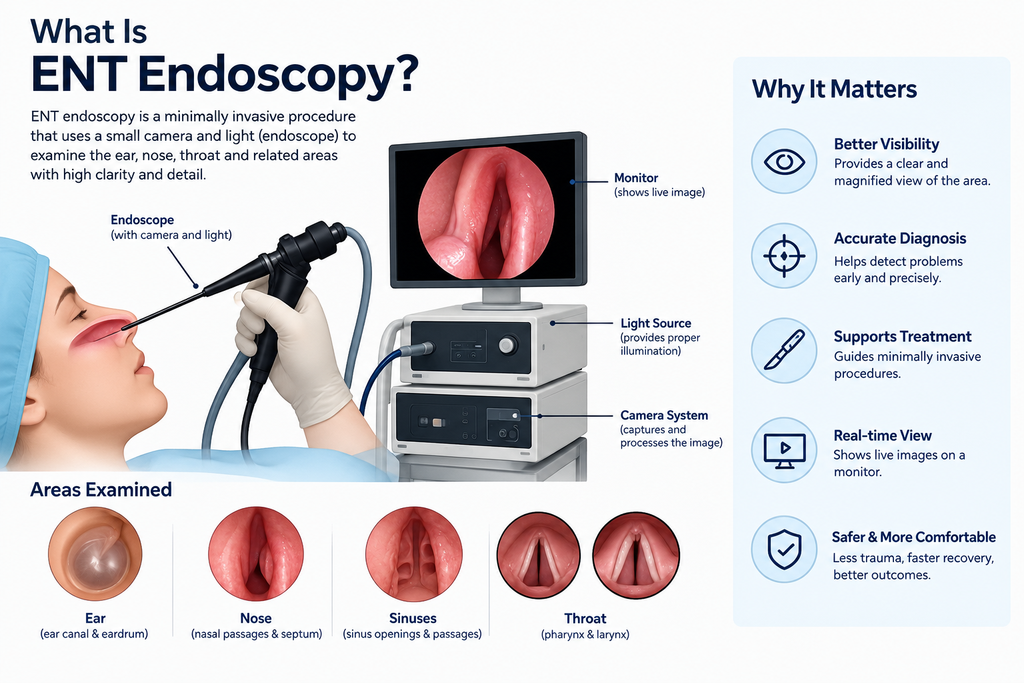
ENT endoscopy is a procedure in which a small endoscope is used to examine areas inside the ear, nose, throat, or sinus passages.
The endoscope contains an optical system and works with a camera and light source. The image can be displayed on a monitor, allowing the doctor to view the area in detail.
Depending on the purpose of the examination, different types and angles of endoscopes may be used.
2. Examination of the Nose
One of the common applications of endoscopy in ENT is examining the nose.
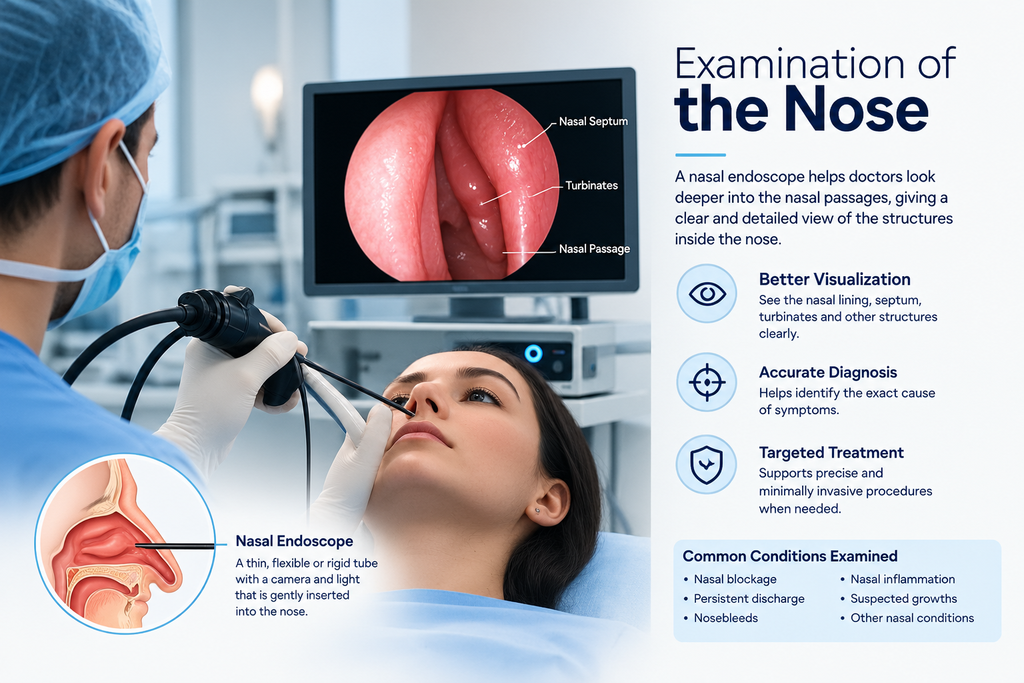
A nasal endoscope can help doctors look deeper inside the nasal passages than a normal examination may allow. It can be used to observe the nasal lining, septum, turbinates, and other structures.
It may be useful when investigating problems such as:
- Nasal blockage
- Persistent nasal discharge
- Nosebleeds
- Nasal inflammation
- Suspected nasal growths
- Other nasal conditions
Clear visualization allows the doctor to examine the area more closely.
3. Sinus Examination
Endoscopy is also widely used in the evaluation and treatment of sinus-related conditions.
The endoscope can help doctors examine the openings and passages connected to the sinuses. During certain sinus procedures, it can also provide a live view of the area being treated.
This is particularly useful in minimally invasive sinus procedures, where detailed visualization is important.
4. Examination of the Throat and Voice Box
Endoscopy can also be used to examine the throat and larynx, commonly known as the voice box.
Doctors can observe structures involved in speaking, swallowing, and breathing. It may help in evaluating symptoms such as voice changes, difficulty swallowing, throat discomfort, or other ENT concerns.
Depending on the examination, flexible or rigid endoscopic systems may be used.